
A Comprehensive Guide on IVF Injections
What Are IVF Injections?
IVF (In Vitro Fertilization) injections are exogenous hormonal preparations administered during assisted reproductive technology (ART) cycles to regulate and optimize ovarian function. These medications are used to induce controlled ovarian hyperstimulation (COH), suppress premature luteinizing hormone (LH) surges, and support the luteal phase to enhance the likelihood of successful implantation and early pregnancy maintenance.
In contrast to a natural menstrual cycle where typically a single dominant follicle matures and ovulates IVF protocols employ these hormonal agents to promote the simultaneous development of multiple ovarian follicles, thereby increasing the number of retrievable oocytes and improving the probability of fertilization and viable embryo formation. Advanced procedures like ICSI Treatment in tilak nagar further enhance fertilization success, especially in cases of male factor infertility, making modern fertility care more effective and accessible at a trusted ivf clinic in west delhi.
Why Are IVF Injections Needed?
They are used to:
- Stimulate the ovaries to produce multiple eggs
- Prevent premature ovulation
- Trigger the final maturation of eggs
- Prepare the uterus for embryo implantation
- Support early pregnancy after embryo transfer
Types of IVF Injections
1. Ovarian Stimulation Injections (Gonadotropins)
These are the main injections that stimulate egg production.
Examples:
- FSH (Follicle Stimulating Hormone)
- hMG (Human Menopausal Gonadotropin)
Purpose: Encourage ovaries to develop multiple follicles (eggs)
2. GnRH Agonists / Antagonists
These medications prevent your body from ovulating too early.
Types:
- Agonists (e.g., long protocol)
- Antagonists (e.g., short protocol)
Purpose: Control timing of ovulation
3. Trigger Shot (hCG or similar)
Given when follicles are ready.
Purpose: Final maturation of eggs before retrieval
Timing is critical usually 34-36 hours before egg retrieval
4. Progesterone Support
Given after egg retrieval and embryo transfer.
Purpose: Support the uterine lining for implantation
Forms:
- Injections
- Vaginal gels/suppositories
Typical IVF Injection Timeline
Phase 1: Ovarian Stimulation (Day 2–3 of cycle)
- Daily hormone injections for ~8–12 days
- Frequent ultrasounds and blood tests
Phase 2: Ovulation Suppression
- Added during stimulation phase
Phase 3: Trigger Injection
- Single, precisely timed shot
Phase 4: Egg Retrieval
- Happens ~36 hours after trigger
Phase 5: Progesterone Support
- Starts after retrieval and continues into early pregnancy
Where Are IVF Injections Given?
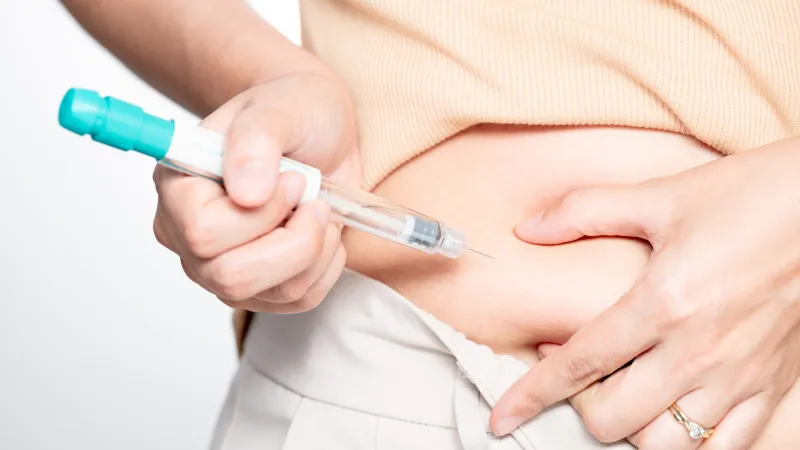
Most are subcutaneous (under the skin):
- Abdomen (most common)
- Thigh
Some progesterone injections are intramuscular:
- Upper buttock
Common Side Effects
Mild (very common)
- Bloating
- Mood swings
- Headaches
- Bruising at injection site
Moderate
- Abdominal discomfort
- Breast tenderness
Rare but serious
- Ovarian Hyperstimulation Syndrome (OHSS)
- Symptoms: severe bloating, nausea, rapid weight gain
- Always contact your doctor if symptoms feel severe.
Tips for Managing IVF Injections
Before Injecting
- Wash hands thoroughly
- Let medication reach room temperature
- Follow exact dosage instructions
During Injection
- Pinch the skin gently
- Insert needle at 45–90° angle
- Inject slowly
After Injection
- Rotate injection sites
- Apply ice if sore
- Dispose of needles safely
Emotional Side of IVF Injections
IVF can be physically and emotionally demanding.
Common feelings:
- Anxiety
- Stress
- Hope mixed with uncertainty